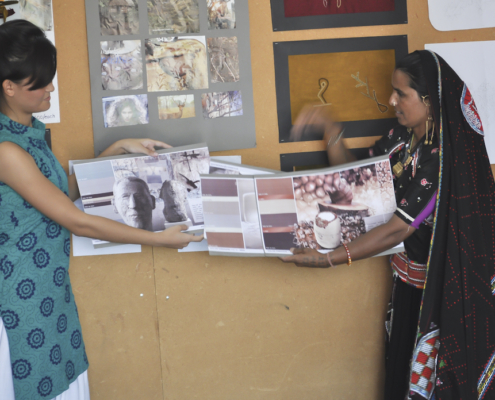
 I was looking forward to speaking at a recent NIFT Alumni Meet at the Mumbai India Fashion Forum. But, it was not in the cards. The plane never took off from the Bhuj airport. The pilot tried but luckily he was careful enough not to fly a defective plane. There I was with a powerpoint I was quite pleased with, and a message for young NIFT designers. So here goes, readers, this one is for all of you now. I hope it strikes a chord…
Looking through the galaxy of fashion stars gracing the India Fashion Forum event, I wondered where does craft fit? Here is craft- the embodiment of heritage, timelessness- or at least slowly changing, and there is fashion- fast, sleek, and inherently fleeting. It feels a bit uneasy to be on the same platform.
And truthfully, many times the use of craft in fashion visually conveys this uneasy fit.
So, what I want to discuss is, how to bring craft gracefully into fashion….and more important, especially for artisans, the how to use this as an opportunity to improve craft’s value?
Value is the question. How do we value craft?
Recently, a faculty member of a local institution visited my office. We wanted to see how his management students could help our artisan students. He suggested branding and marketing. I told him what they really need is to increase the value of their work, because artisans struggle to earn a fair livelihood.
Suddenly, his demeanor changed. “If they are struggling, why is craft so expensive?” he asked.
There it was: “So expensive.”
The question is, compared to what?
I believe that the root of the issue of value for craft is the perception of artisans.
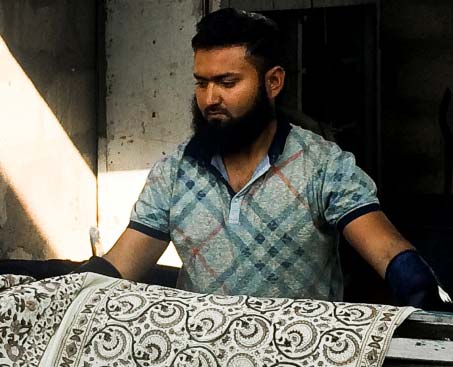
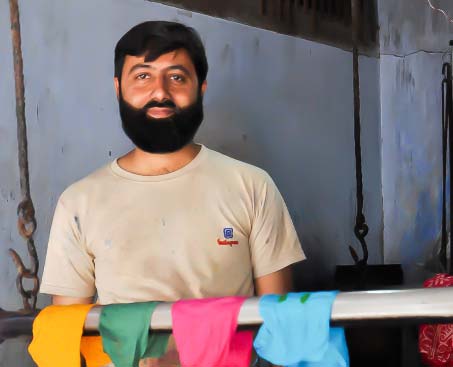
Most people today perceive artisans as workers. However, if we instead understand artisans as key guardians of cultural heritage, a new approach emerges.
Next is the perception of cultural heritage itself. Cultural heritage is invaluable. It is more than product. It is story, history and language. Cultural heritage is India’s identity and USP. And I believe it can be used to create an edge in the market.
So, the design challenge is to innovate on traditions for the contemporary market- without losing the essential identity. The challenge is not to make craft elements “not ethnic,” not to separate “technique” and “content,” but to embrace tradition and innovate appropriately. I believe that the individuals who can best do this are the keepers of cultural heritage: the artisans themselves.
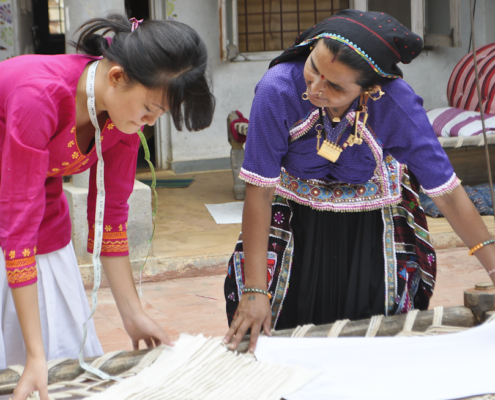
For designers, the challenge is thus to engage artisans in co-design, as equal partners. Co-design rests on mutual respect and value. This means valuing artisans as well as the art. I believe we can do this by taking a multi faceted approach. And all of the facets require education.
One facet is our part, the approach of consumers and designers. When we speak of craft and artisans, we use words like “languishing” and “intervention”. The underlying perception seems to be patronizing- “these poor guys…” We need to find a new language, and changing the perception to do so requires education, especially practical education: contact and experience.
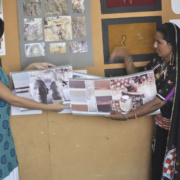
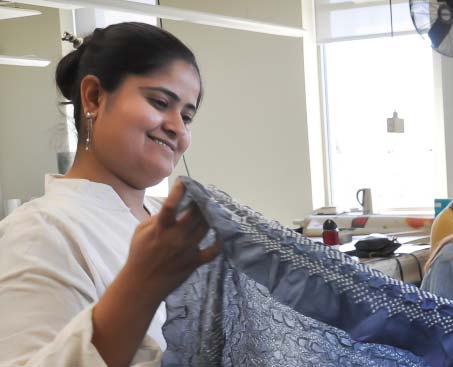
Simultaneously we have to educate artisans to enable co-design. For the past decade, through Kala Raksha Vidhyalaya and now Somaiya Kala Vidya, I have been involved in educating artisans in design and business. The intent is to teach artisans to define and appreciate their traditions, and then to vary them.
By now, we happily have 136 graduates. They are clearly examples of the transformative power of education. If we empower artisans, they will innovate with cultural integrity, raising their value as artisans and sustaining traditions. These artisan graduates have demonstrated their ability to meet urban designers comfortably on an equal platform.
Finally, in my own education on this amazing journey of artisan education, this year’s subject was the importance of ownership. Ownership, is a great motivator, and generator of creativity and quality. If we can insure ownership, people do their best work. (and this goes well beyond the realm of craft!) A Kashmiri woman I met at a conference on creativity related how she was baffled to see a highly regarded artisan in a workshop doing lackluster work. She asked him what the problem was. He answered simply, “I can’t relate to these designs.”
We can eliminate such problems, and mobilize the full potential of artisans.
When artisans own the results of their work, the question of quality- not only technical but also aesthetic- is organically resolved.
Despite increased capacity, traditional artisans do continue to face challenges in earning a fair livelihood. As stewards of cultural heritage, they need clients who understand and appreciate the value of their traditions. To meet these clients, they face barriers of language, culture, and experience of a range of markets. Artisans often have limited working capital and knowledge of raw material sources.
We can work together, through the world of fashion, to raise the value of craft. What I envision is a world where urban designers and artisan designers can meet on the same platform, where they can work together to use each others’ strengths in ways that allow creativity and ownership. This, true co- design offers the potential to develop fresh, exciting, mutually satisfying, and above all doubly valuable fashion!

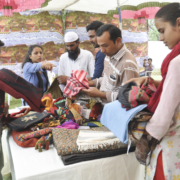
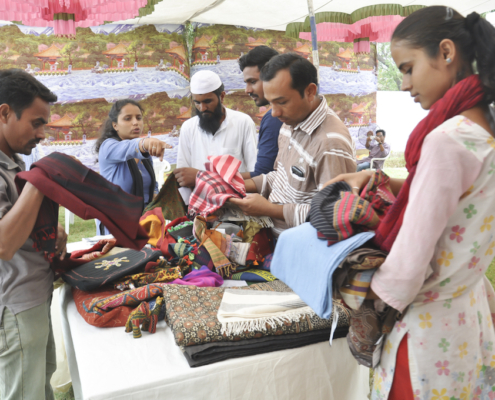 Two days ago, the women artisans of Sahasra stayed overnight, after a long and intense workshop. Somaiya Kala Vidya has become a safe and nurturing place for them. And in the morning they were in no hurry to leave.
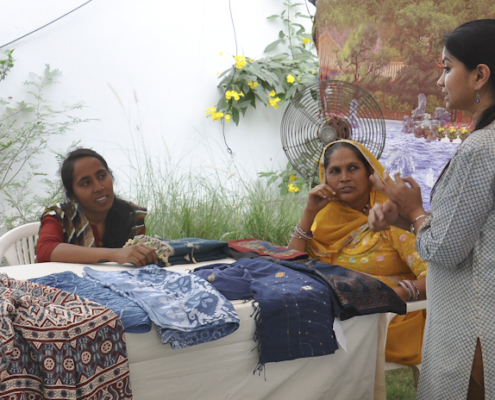 Bishakha shared that when she was a student and decided to go into design, her parents warned her, dear, don’t become a tailor, now!
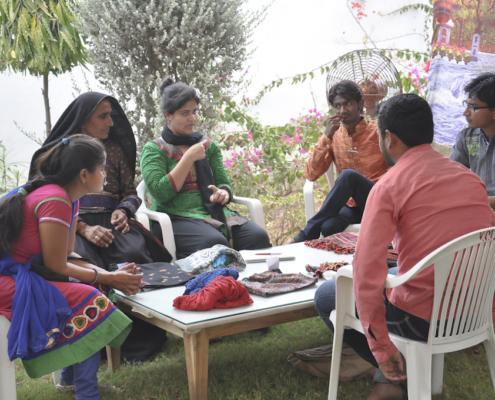 I asked the artisans why art and craft are seen differently? We talked about the role of the critic. I told them the wonderful story of how a visionary critic had made the world see the quilts of Gee’s Bend as art. We need a brand ambassador! They exclaimed.