ABOUT US

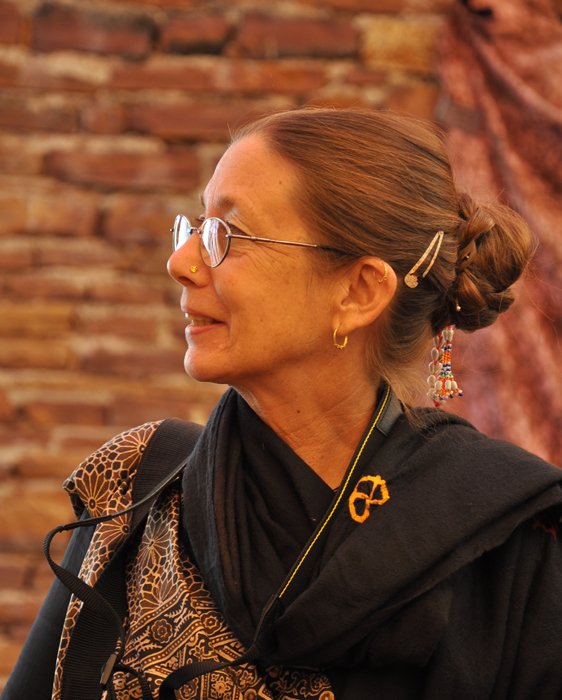
Founder Judy Frater

Judy Frater traveled to India at age 19 to improve her batik techniques. On a trip to Kutch, she discovered embroidery and diverted to exploring the mystery of austere women creating raucous colourful tableaus. She went on to do Masters Degrees in Anthropology at the University of Minnesota and Museum Studies at the University of Washington, and continued research on traditional textiles of Kutch for over 30 years. She authored the award-winning book Threads of Identity, and chapters in several other books.

Judy became Associate Curator at The Textile Museum in Washington D.C. in 1989. In 1990, she received Fulbright, and then Ford Foundation fellowships to India. While studying suf embroidery in Kutch, she listened to an artisan’s question, “Why are you studying us? Why don’t you help us!” This provoked her to co-found Kala Raksha Trust in 1993. Working closely with artisans at Kala Raksha, she comprehended their tremendous creative capacity- and that it was largely unrecognized.

A massive earthquake in 2001 catalyzed Judy to realize a dream of developing a design education program for traditional artisans. She won an Ashoka Fellowship for this project in 2003. The dramatic success of artisan graduates during her eight-year tenure as Founder Director won her the Sir Misha Black Medal for service in design education in 2009, the Crafts Council of India Kamla award in 2010, and the George B. Walter’36 Service to Society Award from Lawrence University in 2014.

In November 2020 she was awarded the Rotary Club of Delhi Premier Distinguished Service Award, and in July 2021 she was recognized in Architectural Digest India as one of nine “Grande Dames of Craft.”
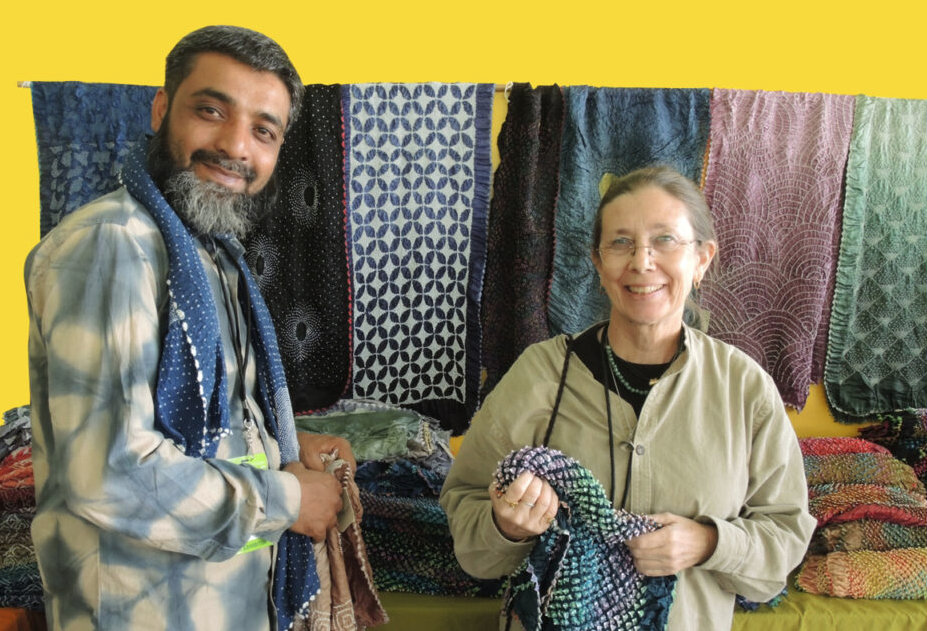
In 2014, to build the program to an institute, Judy joined forces with the K.J. Somaiya Gujarat Trust to establish Somaiya Kala Vidya.

She directed this school of design for artisans for over six years, expanding to a graduate course in business and management, artisan-to-artisan outreach, and co-design programs.

Textiles Live was envisioned to introduce you to the uniquely creative artisan graduates of these programs.

Founder Judy Frater Shares the Backstory

Art In The Desert

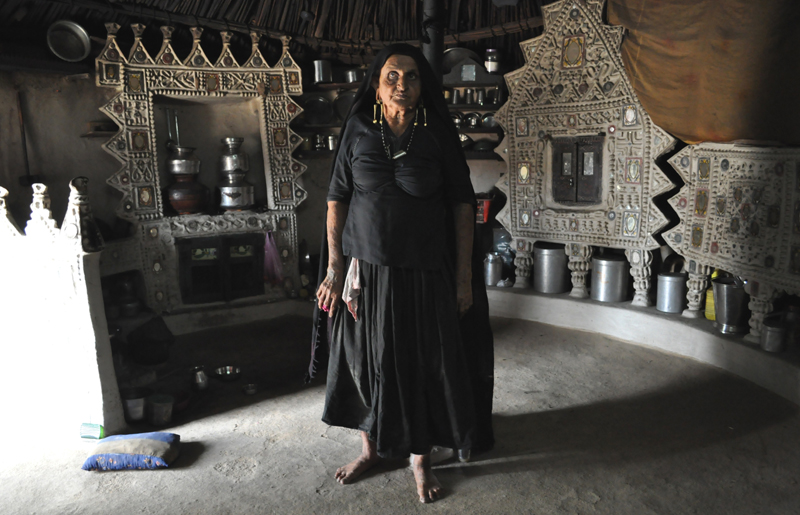
Years ago I lived with Rabari camel herders in the desert region Kutch. What struck me was that everything they owned was not only used regularly, but also beautiful and made by artisans they knew. The kitchen vessels were hand hammered brass and individual dining tables were hand carved wood. Women wound silk floss embroidery threads on colourful lathed and lacquered spools, and intricately embroidered clothes made of hand woven and resist dyed fabric. Rabaris lived an austere life with minimal currency. But their life was enriched with art.