TEXTILE TECHNIQUES

Learn the How of Craft Traditions

Technique is the Art of craft. The intricate processes of hand work require knowledge and patience. The slower the work, the more beautiful the result. Traditionally, textiles of Kutch were created without thought for time. The goal was to create the most technically excellent, beautiful and long-lasting piece so that artisans would be remembered by their intimately known clients.

Tradition is the basis. We want you to learn it to understand how each artisan designer pushes its limitations.

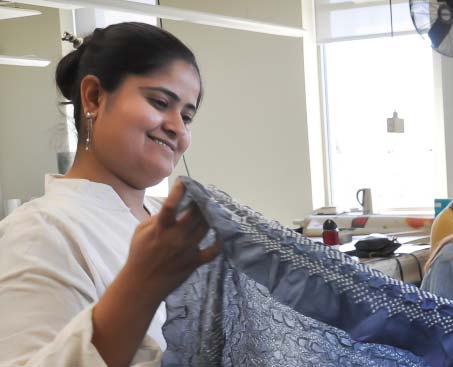
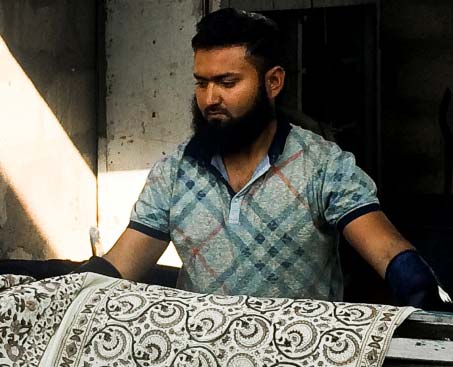
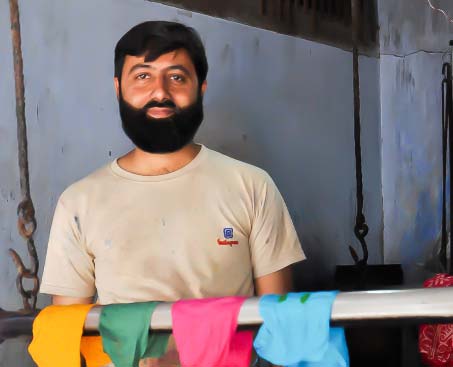
Here is a glimpse. On our tours, you can observe firsthand- or try your hand at weaving, Ajrakh print, batik, bandhani or embroidery.
Weaving

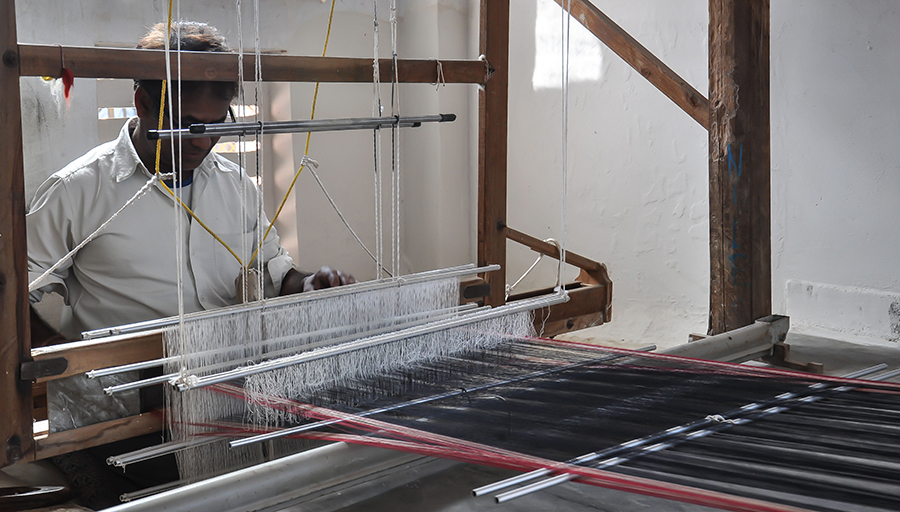
Kutch weaving is practiced on a 4 treadle, fly shuttle pit loom. Its specialty is hand inserted extra wefts -embroidering on the loom. Traditional blankets had interlocking /tapestry wefts and were woven with a hand thrown shuttle.

Originally, Kutch weavers wove coarse local yarns: undyed white and black sheep wool, and cotton. Blankets, skirts, veils and turbans had contrasting borders and patterned ends, and plain, striped or checked fields.

Ajrakh hand block print

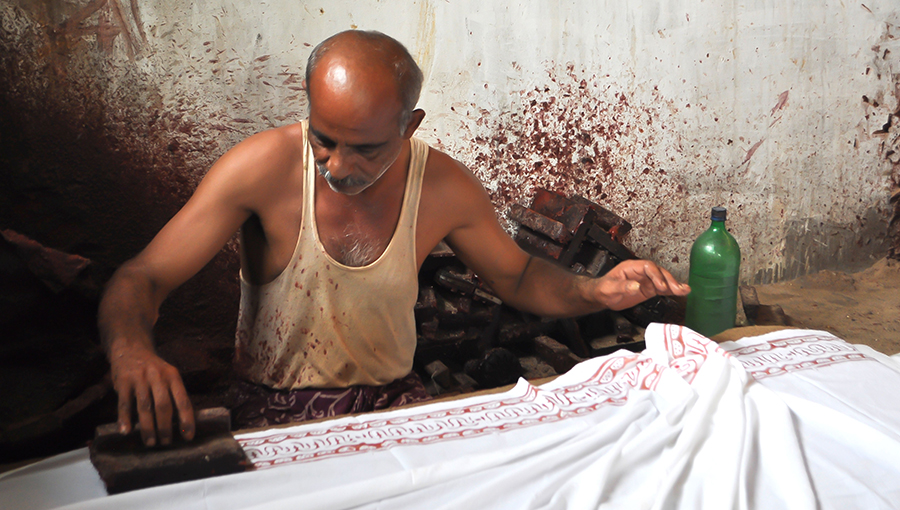
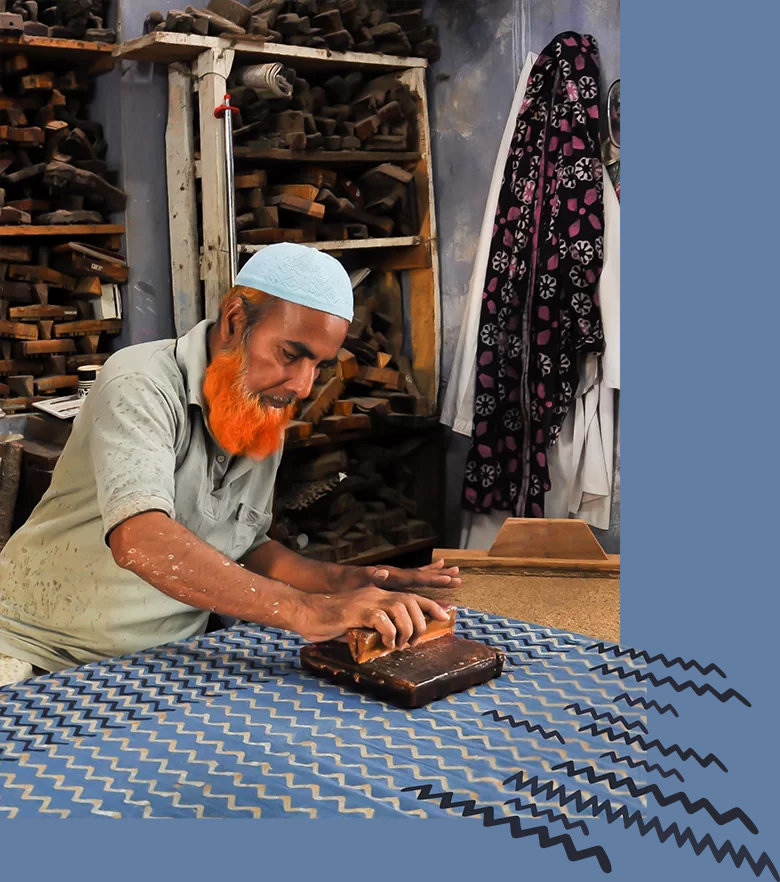
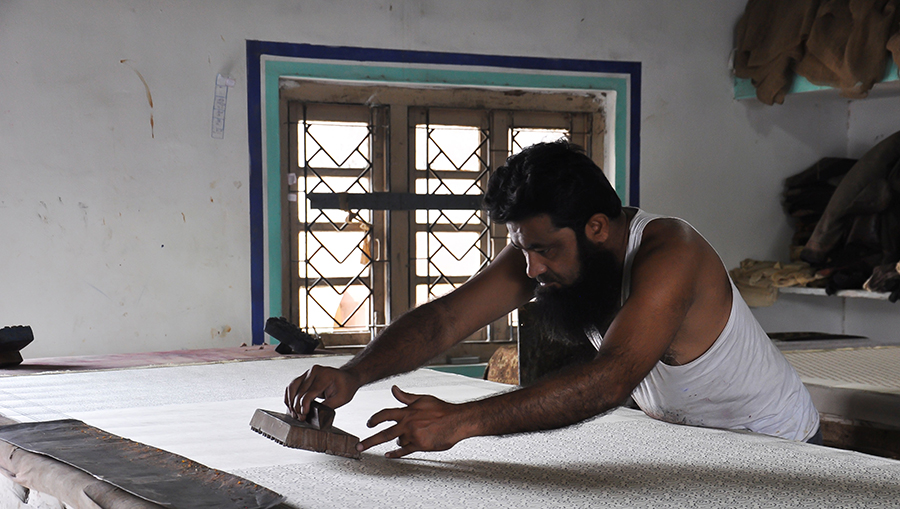
Ajrakh is a resist technique. Gum or mud is printed on the fabric with wooden blocks. The fabric is immersed in natural dye, and the color cannot penetrate the printed areas. Multiple processes create complex, multi colored patterns.

Ajrakh is one of a range of resist prints. Printed fabrics were mostly wrapped or draped, with only a center line of stitching to extend widths. Compositions were side borders, intensely patterned ends, and allover print fields.

Batik

Kutch batik is also resist printing. Wax is applied with wooden blocks, and the fabric is dyed. Wax must be applied while hot, so printing is swift, and dyes are cold. Patterns are light on dark, usually one or two colors per piece.

Originally batik used wax painstakingly extracted from pilu seeds and was only used to create textiles with dark background. White patterns were printed on indigo, red on black, again composed of four borders and allover print fields.

Bandhani

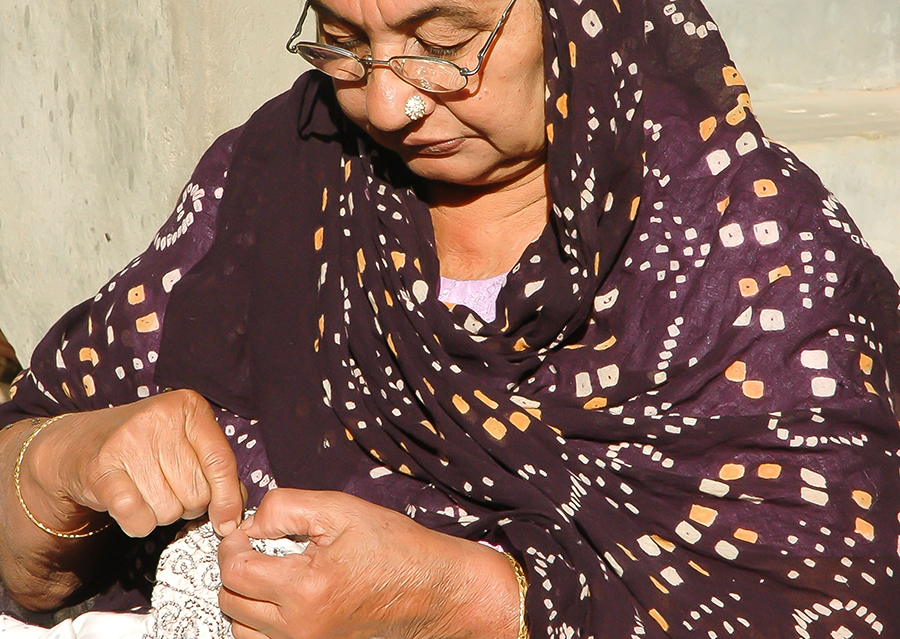
Bandhani is tie dyed resist. Patterns are marked on fabric. Then artisans pinch tiny bits of fabric along pattern lines and tightly bind them with fine cotton thread. The fabric is immersed in dye, and dotted negative patterns emerge.

Considered auspicious, most traditional bandhanis had white, yellow and green dots on a red ground. Some fabrics had red dots on black. Designs had borders, and fields comprised all over patterns, grids, or large circular medallions.

Hand Embroidery

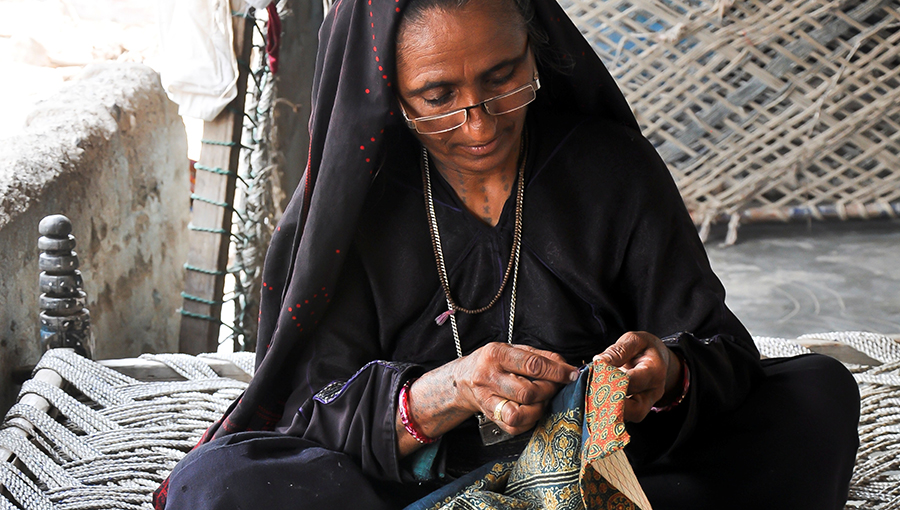
Each embroidery style of Kutch is a unique combination of stitch, motif, pattern and color. Rabari embroidery outlines bold motifs with yellow and white tight square chain stitch, and fills them with bright colored accents: multi-shaped mirrors and interlacing stitches.

Suf embroidery, worked from the reverse, uses fine surface satin stitch counted on warp and weft yarns to create delicate geometric patterns. Traditionally green thread was used on red ground, or red on white.